Updated
Compared October 2026
Social skills training for adults
The best social skills training for adults depends on the goal: a club for a live audience, a course for theory, coaching for tailored feedback, or an app for daily practice.

4.8 ★ on the App Store
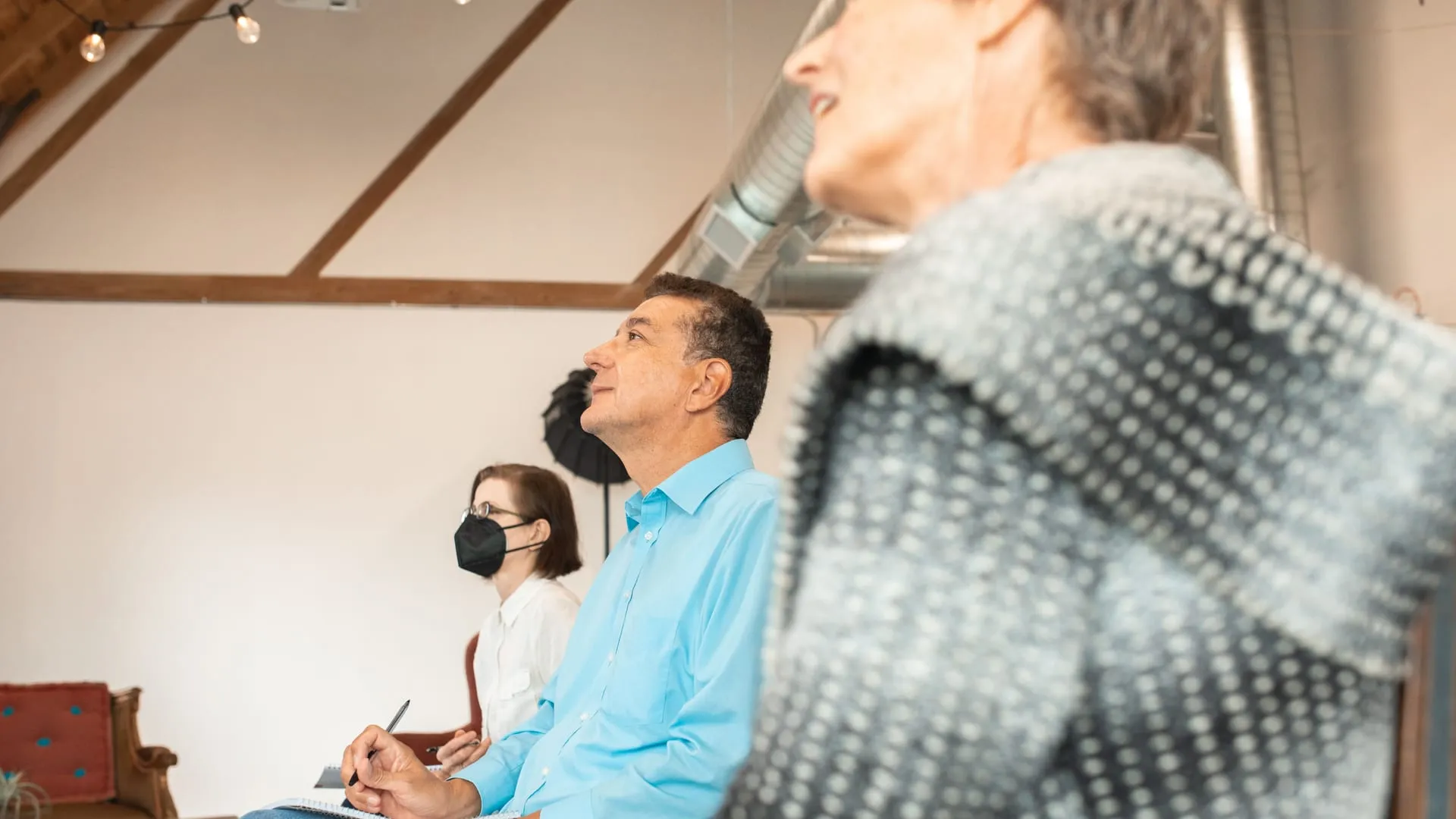
The best social skills training for adults depends on what you need: a club for real people, a course for theory, coaching for tailored feedback, therapy for clinical anxiety, or an app for daily practice.
How we compared
We compared routes on five points: whether you practise with real people, whether feedback is personal, how structured it is, how often you can practise, and what it is not suited to. We describe formats generally where we did not check a specific provider, and we do not quote prices we have not seen.
What are your options?
| Route | Live people | Personal feedback | Best for |
|---|---|---|---|
| Toastmasters | Yes | Peer evaluation | Speaking and meeting practice |
| Group classes and improv | Yes | From a teacher or group | Spontaneity and comfort |
| Online courses | No | Limited | Theory and structure |
| One-to-one coaching | Yes | High | Targeted personal goals |
| Therapy and CBT | Yes | Clinical | Social anxiety disorder |
| Apps such as Volo | No | Automated | Daily private reps |
1. Toastmasters
Toastmasters is best for regular practice with real people. It runs speaking clubs, in person or online, with prepared speeches, unplanned Table Topics and evaluation from members. Its how-to-join page lists $72 USD semiannual international dues and a one-time $25 USD new member fee, as of September 2026, and says visiting a club is free. It centres on speaking, so it is narrower than general socialising. See what Toastmasters is and how to find a club.
2. Volo
Volo is best for private daily practice of everyday conversation. It is a mobile app with 7 skill tracks, 79 lessons of 2 to 4 minutes and 25 AI roleplay scenarios you can type or speak; the coach grades three goals and quotes your own lines back. What To Say offers 61 scripts in 8 categories, and Teleprompter measures words per minute, filler words and longest pause on 15 read-aloud scenes. Volo is free to download and try.
Volo has no job-interview roleplay and is not therapy. It is not a live audience. Volo on the App Store · Volo social skills
3. Coursera and other online courses
Online courses give you structure and theory, not live practice. As one example, Wesleyan University’s Social Psychology course on Coursera is described as self-paced, over 4 weeks at about 10 hours a week, with an audit option and a certificate on paid enrolment. It covers why people behave as they do, such as persuasion and group behaviour, rather than drilling conversation. LinkedIn Learning and similar platforms offer video courses on communication in the same spirit. Pair a course with practice.
4. Group classes and improv
Group classes and improv give you live, unscripted practice with other people. They are usually run in person by a local teacher, so formats and length vary. Improv in particular trains listening and responding without a script. Check the class description and ask whether beginners are welcome.
5. One-to-one coaching
Coaching gives you feedback built around your own situation. Typical formats are recurring video or in-person sessions with a coach who sets exercises between meetings. The quality depends on the coach, so ask what method they use and what you would work on.
6. Therapy and CBT for social anxiety
Therapy is a distinct route for clinical social anxiety, not a competitor to the others. The NHS defines social anxiety disorder as a long-term and overwhelming fear of social situations, and lists CBT as a recommended treatment. If fear leads you to avoid everyday situations, speak to a GP or a qualified therapist. Skills practice can sit alongside treatment, and a clinician can advise on that.
Which social skills training should you choose?
Choose by the gap you want to close. If you want a live audience, join a club or class. If you want theory, take a course. If you want tailored feedback, try coaching. If fear is stopping you, see a health professional first. If you want short private practice on your own schedule, an app fits. Many people combine two. See best social skills apps for a wider app comparison.
Sources
Features, platforms and free tiers were checked in each app and against its store listing or website on by Linda Bennett. Apps change; if something here is out of date, tell us. Volo is our app, from $19.99 a year; see our editorial policy for how we compare it with others.
- Toastmasters (In person and online clubs): toastmasters.org
- Volo (iPhone, Android): getvolo.co
- Coursera (Web): coursera.org
Questions people ask
What is social skills training?
It is any structured practice at communicating with other people, such as listening, starting conversations and reading social cues. It ranges from clubs and courses to coaching and therapy.
Is social skills training the same as therapy for social anxiety?
No. The NHS describes social anxiety disorder as a long-term and overwhelming fear of social situations and recommends CBT as a treatment. Skills practice is a separate route.
Can adults improve social skills?
Adults can practise the habits involved, such as listening and starting conversations. Results vary from person to person.
What is the cheapest way to start?
Visiting a Toastmasters club is free, and many apps have free tiers.
Five minutes today. Different rooms tomorrow.
Start with the free lessons on iPhone or Android. Unlock everything when it clicks.
4.8 ★ from 189 ratings on the App Store. 50,000+ users.